Éducation Environnementale pour Un Terre Meilleure (EEFABE) Canada

Vous avez une initiative en développement durable
en tête? Collaborons afin de créer ensemble un impact environnemental durable.
Contactez‑nous
- +1 343 597 4664
- info@eefabecanada.org
- Toronto, Ontario
Abonnez-vous
Suivez-nous
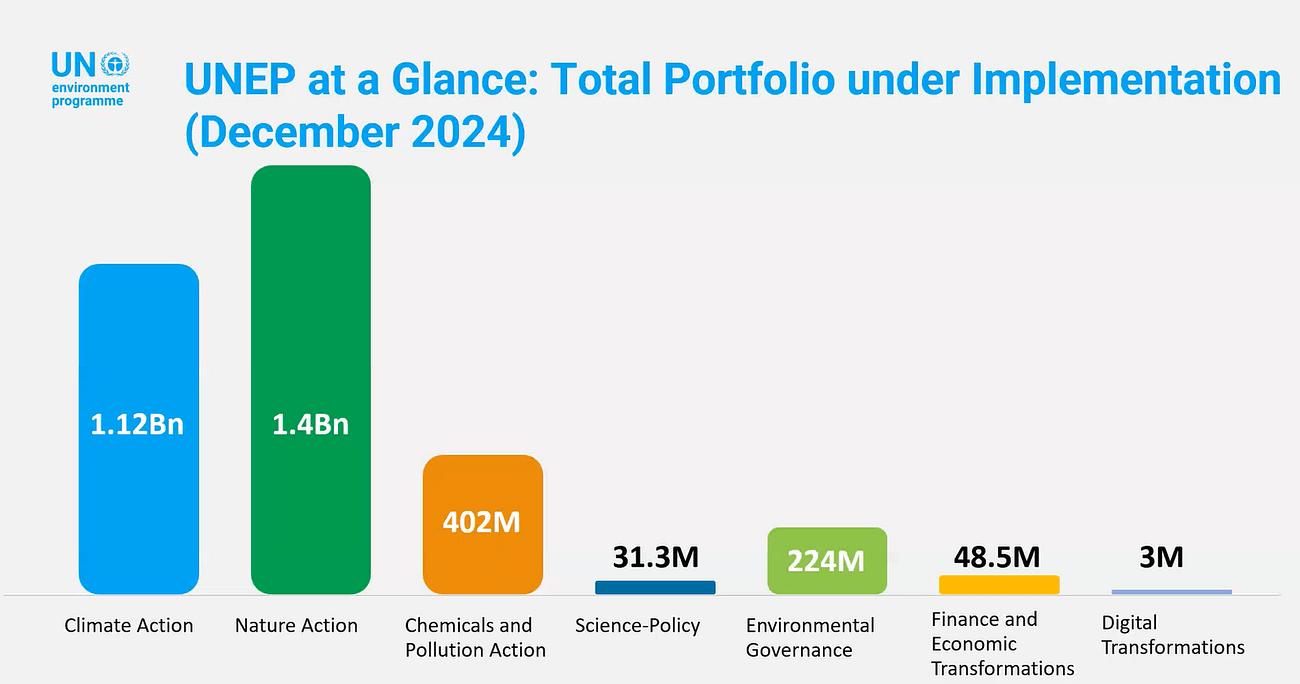
As I sit in the 12th Annual Subcommittee Meeting of the Committee of Permanent Representatives (CPR) in Nairobi, one fact becomes clear: climate action is no longer about pledges but about measurable, financed, and transparency delivery. The Programme Performance Report (PPR) 2024 underscores this shift powerfully.
The data reveals a significant leap in climate strategy adoption worldwide. UNEP’s target for 2024 was 146 actors adopting climate change strategies; the result was 201. This isn’t just a number. It reflects how governments, institutions, and organizations are now weaving climate resilience into the fabric of their governance. The success here is not only quantitative but qualitative, as these strategies are being designed with stronger transparency arrangements and accountability systems.
Transparency is one of the anchors of the 2024 climate performance story. With a target of 115 actors reporting enhanced transparency arrangements, UNEP achieved 156. This is crucial because without transparency, financial flows and emission commitments risk becoming hollow promises. It signals that global efforts are increasingly aligned with mechanisms like the Enhanced Transparency Framework under the Paris Agreement.
You can also read : Digging Deeper: Why Climate Justice Starts with How We Mine
Finance is the other pillar. The targets for climate finance mobilization were ambitious: US$755 million in annual investment and US$451 billion in decarbonized assets. What UNEP achieved exceeded expectations. US$937.68 million invested and US$672.39 billion in decarbonized assets. This surge is evidence that financial markets are responding, albeit unevenly, to the urgency of decarbonization.
Yet, in the hallways of this Nairobi meeting, one can sense a pressing question: how equitable is this finance? Are developing countries, especially in Africa, receiving their fair share? While the figures are encouraging, climate finance still disproportionately benefits larger economies with stronger institutional capacity.
As I reflect, the lesson here is clear. Climate action cannot be judged only by aggregate numbers. We must interrogate distribution, accessibility, and inclusivity. As UNEP moves toward 2025 and beyond, its role must be to ensure that the transparency mechanisms and financial flows are not just growing, but are reaching the most climate-vulnerable regions.
At Environmental Education for a Better Earth Canada (EEFABE), we recognize that climate action must move beyond pledges to measurable, financed, and transparent delivery, an ethos echoed at the 12th Annual CPR Subcommittee Meeting in Nairobi. Our organization contributes by empowering young people in schools and communities through education, advocacy, and capacity-building initiatives that embed climate resilience into local governance and development strategies. We actively promote transparency by fostering community-led monitoring systems and supporting data-driven climate reporting aligned with the Enhanced Transparency Framework under the Paris Agreement. Looking ahead, EEFABE Canada anticipates scaling its efforts by facilitating equitable climate finance access for African-led grassroots projects, ensuring that vulnerable regions are not left behind. Our future vision includes expanding partnerships with global institutions to channel decarbonization investments into underserved communities, making climate justice not just a goal, but a lived reality.
Attending among delegates, I realize the Nairobi meeting is not just about numbers; it is about accountability to people and ecosystems. Climate action has momentum, but justice must be its compass.
Reference: UNEP program performance report 2024

Ulrich Stephane Tamo
Hi, my name is Ulrich Stephane Tamo. I am an environmental activist and ocean lover. I love to travel and write blogs.
2 thoughts on “Climate Action at a Crossroads AS Transparency and Finance Take Center Stage”