Environmental Education for a Better Earth Canada

Have a sustainability initiative in
mind? Let’s collaborate.
Contact Us
- +1 343 597 4664
- info@eefabecanada.org
- Toronto, Ontario
Subscribe
Follow Us
May 24: Black Creek Parkland Forest cleanup report
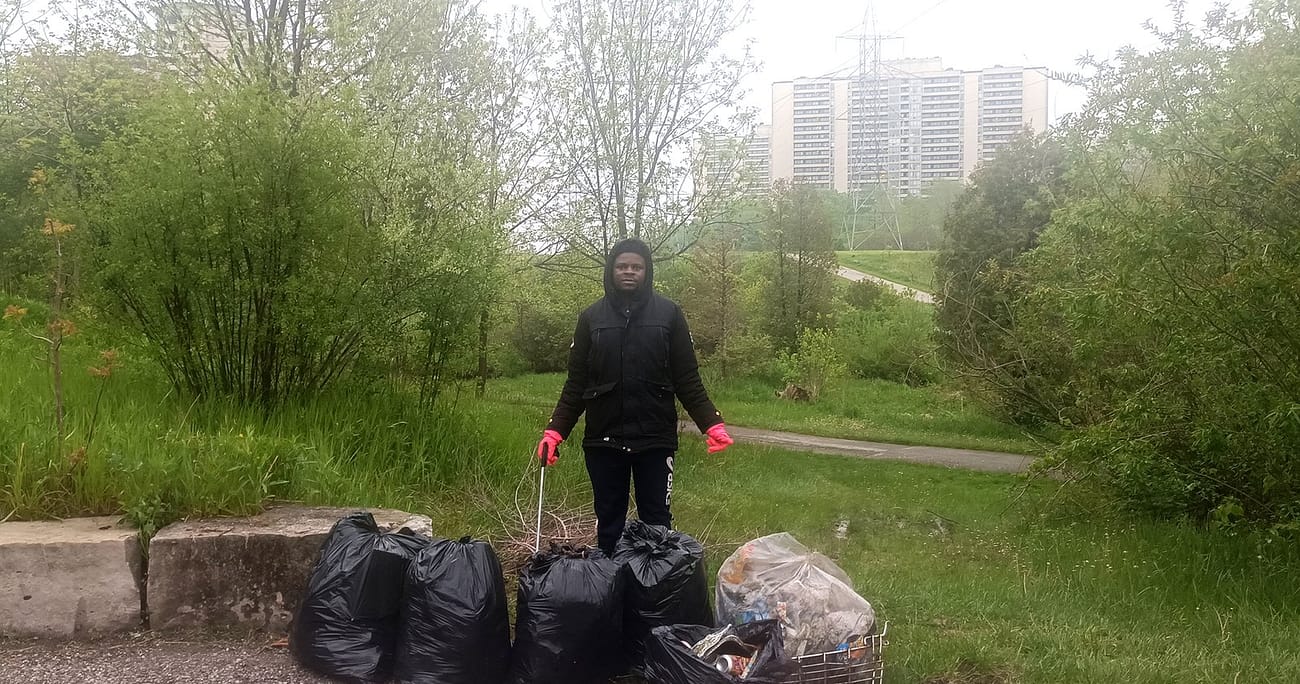
Urban forests quietly support city life. They store carbon, regulate temperature, manage stormwater, and provide habitat for countless species. Yet what happens deep inside these forests often goes unseen, especially plastic pollution that accumulates far from roads and trails, as is the case in this May 24 Black Creek parkland forest Cleanup report
On May 24, 2026, Environmental Education for a Better Earth – Canada carried out another community‑led cleanup inside Black Creek Parkland Forest, continuing a long‑term effort to remove plastic pollution from Toronto’s urban forests and reach a goal of removing one tonne of plastic by year‑end.
Despite poor weather and low turnout, action went ahead. The result: meaningful progress, valuable field observations, and renewed evidence that every effort counts.
Cleanup Overview
- Date: May 24, 2026
- Time: 4:00 PM – 8:25 PM
- Location: Black Creek Parkland Forest (Rudy’s Garden to Finch Hydro Corridor green space)
- Participants: 1
- Approach: Interior forest and green spaces cleanup, waste sorted at source
This section of Black Creek Parkland is a less‑frequented urban green space, allowing waste to accumulate unnoticed for years.
What We Found on May 24: Legacy Pollution and Wildlife Impact
Throughout the cleanup, legacy plastics were collected, items that had clearly been in the forest for extended periods. Many had begun breaking into smaller fragments, increasing the risk of microplastics entering forest soil and plant systems.
Among the more concerning discoveries were:
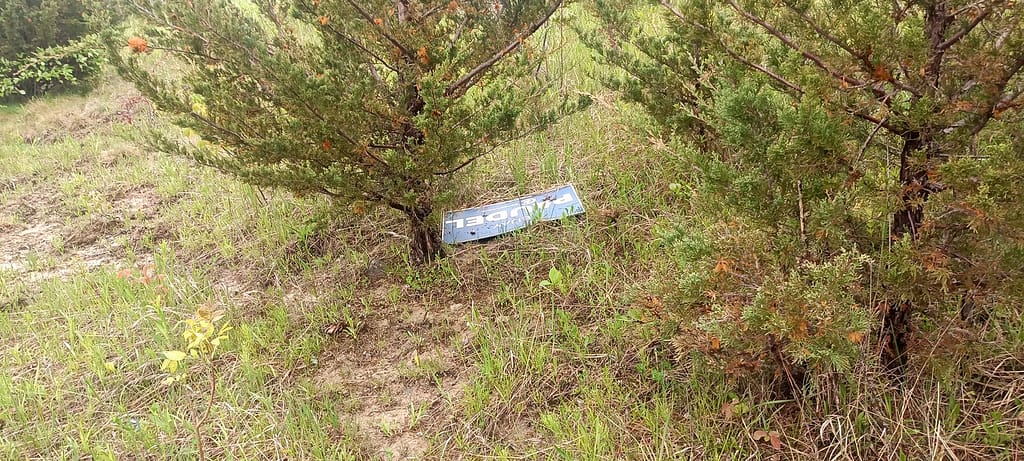
- A toy gun discarded deep in the forest
- Election postal materials from previous elections
- Extensive dumped waste hidden in overgrown vegetation
These items illustrate how everyday human activity leaves long‑lasting ecological footprints.
Wildlife Observations: Plastic as Habitat Obstruction
On May 24, over five snakes were observed during the cleanup. Several were found inside or beneath plastic containers and plastic sheets. While wildlife may temporarily use discarded plastics as shelter, this is a sign of habitat obstruction, not adaptation.
Plastic alters temperature, moisture, and movement patterns, placing stress on species already impacted by climate change and habitat fragmentation.
Vegetation Stress and Urban Forestry Implications
A particularly troubling discovery was plastic wrapped tightly around a young pine tree, likely planted as part of City of Toronto urban forestry initiatives. When plastic constricts young trees, it can:
- Limit growth
- Damage bark and vascular tissue
- Increase vulnerability to disease
Urban forest investments lose value when pollution undermines tree survival.
Read our previous report: BLACK CREEK PARKLAND FOREST CLEANUP REPORT: May 17th, 2026
Measured Impact
Waste Removed on May 24
- 93.25 lbs total waste
- 81.1 lbs plastics
- 12.15 lbs recyclables
- 6 bags removed
Cumulative Impact as of May 24 (Black Creek Parkland)
- 768.31 lbs total waste removed
- 503.4 lbs plastic removed
- 104.44 lbs recyclables recovered
This represents 22.83% progress toward removing one tonne of plastic from Toronto’s urban forests.

Why Consistency Matters
Large cleanups are valuable, but consistent, repeated action is what restores ecosystems. This May 24 cleanup proves that leadership on the ground, even by a single individual, can drive measurable change.
This approach aligns with:
- UNEP’s Global Plastics Treaty (INC Process)
- Toronto’s Net Zero Strategy
- Government of Canada Plastic Reduction Strategy
The Hidden Cost of “Out of Sight” Pollution in Urban Forests
One of the most overlooked challenges in urban forest protection is that pollution often accumulates out of sight, beyond trails, roads, and areas of frequent human presence. When waste enters overgrown green spaces and forest interiors, it is no longer perceived as a problem, yet its ecological impact continues to grow. Plastics fragment under sunlight, temperature fluctuations, and physical stress, gradually becoming microplastics that infiltrate soil systems, affect moisture retention, disrupt microorganisms, and ultimately enter plant and animal food chains.
In urban settings like Black Creek Parkland, this hidden pollution intersects with population pressure, climate stress, and limited monitoring capacity, creating long‑term ecological strain. Addressing this challenge requires not only cleanup, but also sustained leadership, data collection, community education, and institutional support, elements that community‑led initiatives are uniquely positioned to provide. By consistently returning to the same forest sections and documenting what is found, this work helps make the invisible visible, transforming neglected green spaces into recognized priorities for urban sustainability, biodiversity protection, and climate resilience.
A Call to Action
Protecting Toronto’s urban forests requires collective effort.
You can support this work by:
☕ Donating to support field work
🛠️ Funding cleanup and safety equipment
🙋 Volunteering in upcoming cleanups
🤝 Partnering through ESG or CSR initiatives
If one person can remove over 500 pounds of plastic, imagine what we can achieve together.

Ulrich Stephane Tamo
Hi, my name is Ulrich Stephane Tamo. I am an environmental activist and ocean lover. I love to travel and write blogs.
One thought on “May 24: Black Creek Parkland Forest cleanup report”