Éducation Environnementale pour Un Terre Meilleure (EEFABE) Canada

Vous avez une initiative en développement durable
en tête? Collaborons afin de créer ensemble un impact environnemental durable.
Contactez‑nous
- +1 343 597 4664
- info@eefabecanada.org
- Toronto, Ontario
Abonnez-vous
Suivez-nous
Community Members Discover the Hidden Wonders of Black Creek Ravine During The Interpretive Guided Nature Walk

Fifteen residents joined InTO the Ravines Champions for an immersive journey through Black Creek Parkland Ravine, exploring biodiversity, watershed health, and environmental stewardship.
On Saturday, August 15, 2025, community members gathered at Fred Young Park for a Guided Ravine Interpretive Nature Walk through the Black Creek Parkland Ravine led by InTO the Ravines Champions Ulrich Stephane Tchiegdjo Tamo and Rasheeda O’Brian. Supported by Park People and the City of Toronto through the InTO the Ravines Champion Program, the event brought together 15 residents for an immersive learning experience exploring watershed health, biodiversity, urban ecology, and environmental stewardship. Environmental Education for a Better Earth (EEFABE) Canada proudly supported community outreach and event delivery as a local environmental partner.
The two-hour learning experience was designed to help participants better understand the ecological importance of Toronto’s ravine system, while encouraging stewardship and appreciation for the natural environments that exist within the city. Beginning at Fred Young Park, participants were welcomed and introduced to the concept of Toronto’s extensive ravine network and its role in supporting biodiversity, protecting watersheds, reducing urban heat, and improving quality of life for residents.
Following a brief orientation and safety discussion, the group made its way to Dan Iannuzzi Pond, the first interpretive stop along the route. Here, participants learned about the pond’s role as a critical buffer between urban development and the natural ravine ecosystem. Discussions focused on how stormwater runoff from surrounding streets is directed into the pond, where natural processes help filter sediments and pollutants before water continues downstream into Black Creek.
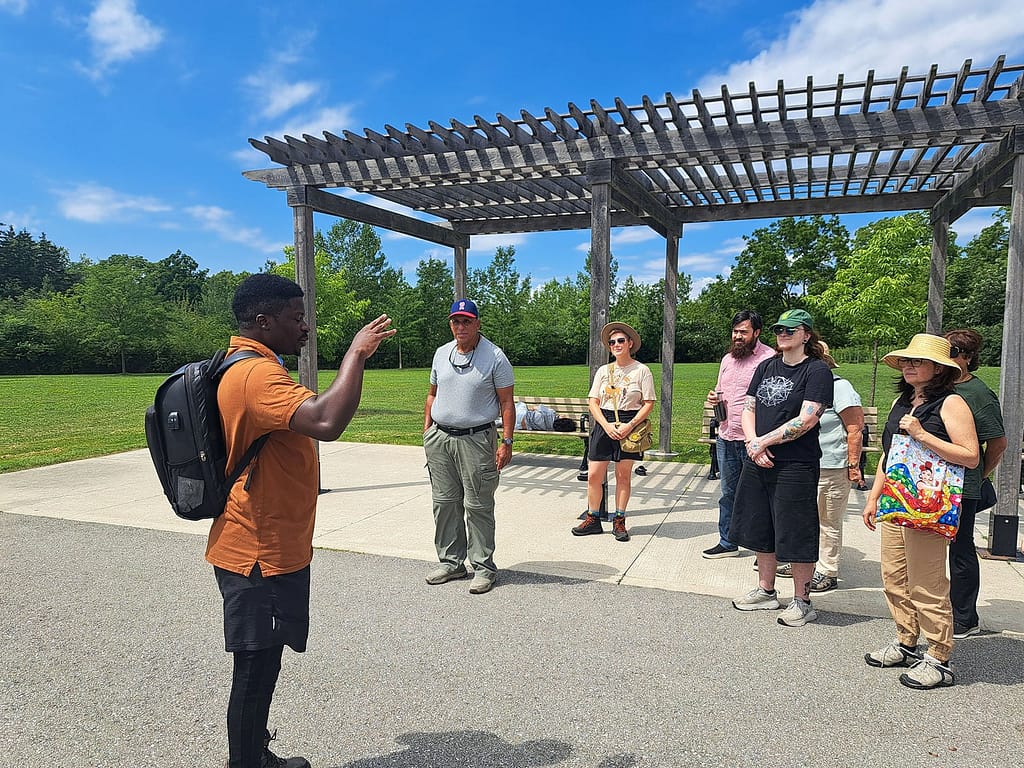
Participants also explored the important role played by native plants growing around the pond. Canada Goldenrod and asters became key examples of how native vegetation contributes to watershed health. These plants absorb water, stabilize soil, support pollinators, and help improve ecological resilience. The discussion highlighted how nature itself provides solutions to many environmental challenges when healthy ecosystems are allowed to thrive.
From the pond, the group entered the wooded sections of the Black Creek Parkland Ravine. As participants transitioned from open urban spaces into the forest interior, attention shifted toward sensory awareness and the unique characteristics of ravine ecosystems.
At a quiet location beneath the forest canopy, participants took part in a guided moment of silence. For one minute, everyone was encouraged to listen carefully and identify the sounds surrounding them. Participants reported hearing birds, leaves moving in the breeze, insects, and distant city sounds. The activity demonstrated how ravines act as natural sound barriers, with their slopes, tree canopies, and understory vegetation helping to soften urban noise.
This experience led to a broader discussion about wildlife habitat. Participants learned that the dense vegetation found within ravines provides shelter and security for birds, mammals, amphibians, and insects. The quieter environment created by the ravine allows wildlife to feed, rest, and reproduce with reduced disturbance from urban activity. The conversation reinforced the idea that urban natural areas are not simply recreational spaces, but functioning ecosystems that support a wide range of species.
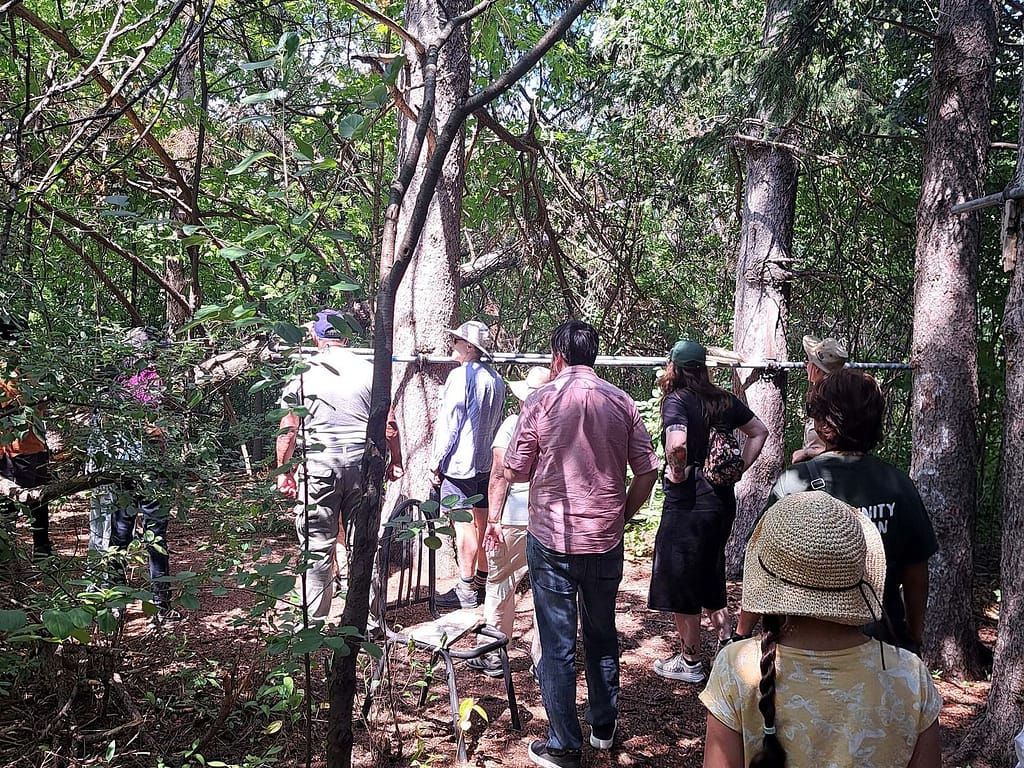
The walk then continued deeper into the ravine through narrow pathways and across wooden bridges spanning flowing sections of Black Creek. Standing beside the moving water, participants explored one of the day’s most important themes: watershed connectivity.
Participants learned that Black Creek is a tributary of the Humber River watershed and that its waters eventually reach Lake Ontario. This realization helped demonstrate how activities taking place upstream can influence water quality throughout the watershed. Litter, pollutants, and waste entering local waterways can travel long distances, affecting ecosystems and communities far beyond where they originate.
Standing beside the flowing waters of Black Creek, participants were also introduced to the environmental stewardship work carried out by EEFABE Canada within local green spaces. Through community cleanups and litter removal initiatives, EEFABE Canada helps prevent plastics and other pollutants from entering the creek and being transported through the Humber River watershed to Lake Ontario. This example connected the day’s watershed lessons to real community action, showing participants how local stewardship efforts directly contribute to cleaner waterways, healthier wildlife habitats, and a more resilient urban environment.
Also Read: Toronto Urban Forest Cleanup Report – 601 Pounds of Plastic Removal (May 2026)
The discussion encouraged participants to view environmental stewardship through a watershed lens. Everyday actions such as reducing litter, properly disposing of waste, and protecting natural areas can contribute to healthier waterways throughout Toronto.
While observing the pond and creek environments, participants also learned about dragonflies and their role in ecosystem health. Dragonflies thrive in still-water habitats such as ponds, where they help control mosquito populations by feeding on mosquito larvae and adult mosquitoes. This discussion provided a practical example of how biodiversity supports ecological balance while benefiting human communities.
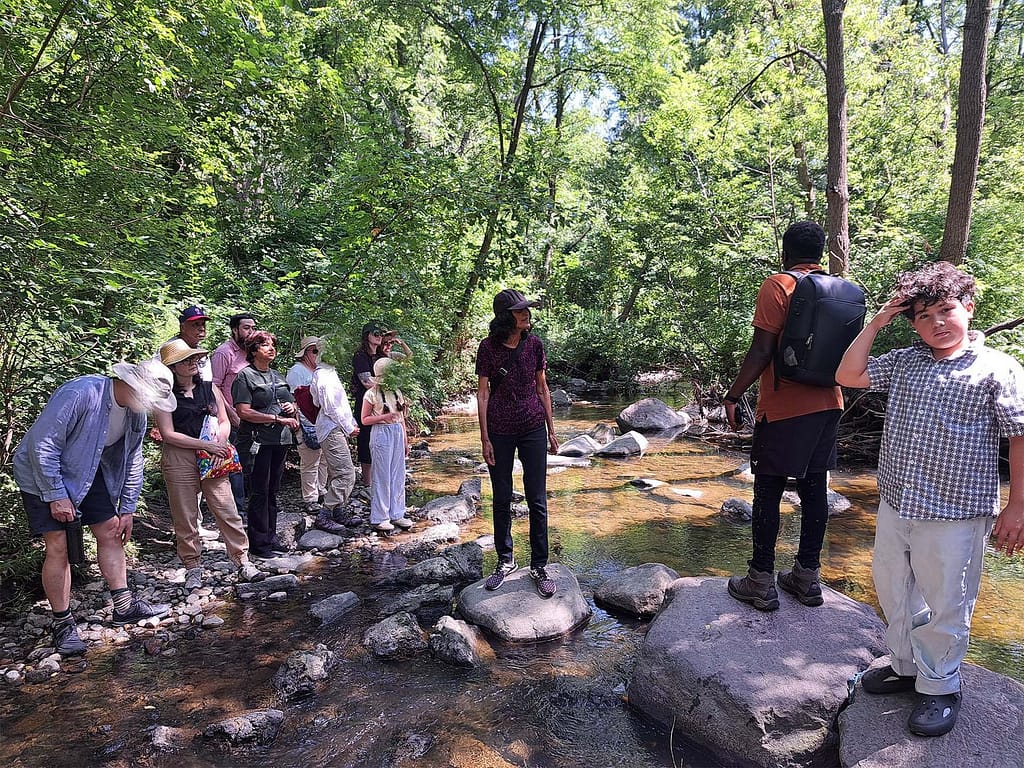
As the group followed the paved trail section of the ravine, attention turned to visible environmental challenges and solutions.
Participants observed signs of erosion along creek banks and discussed the factors contributing to soil loss in urban waterways. At the same time, they explored examples of nature-based solutions that help stabilize landscapes, improve water quality, and strengthen ecosystem resilience. These real-life examples helped participants understand both the pressures facing urban natural systems and the strategies available to protect them.
One particularly engaging moment occurred when a participant shared observations about the nuts produced by trees within the ravine ecosystem. The group discussed how squirrels depend on these food sources and how other species benefit when squirrels break open hard shells, making the contents accessible to birds and smaller animals. This conversation illustrated the interconnected relationships that exist within healthy ecosystems and showed how wildlife species often rely on one another in unexpected ways.
Participants also enjoyed discovering a variety of plants throughout the route, appreciating their textures, scents, and ecological functions. These simple moments of observation helped foster a deeper connection between participants and the natural environment around them.
Returning to Fred Young Park, the educational journey concluded with the Ravine Champion Trivia Game. Participants answered questions based on topics explored during the walk, including watershed health, local wildlife, pollination, habitat conservation, and stewardship practices.
Winners received unique gifts crafted from recycled, reclaimed, and natural materials. The gifts featured biodiversity themes observed during the walk, including dragonflies, butterflies, frogs, owls, birds, honey bees, ravines, and other nature-inspired designs. By using recycled and repurposed materials, the activity reinforced one of the event’s key messages: environmental stewardship begins with the choices we make every day.
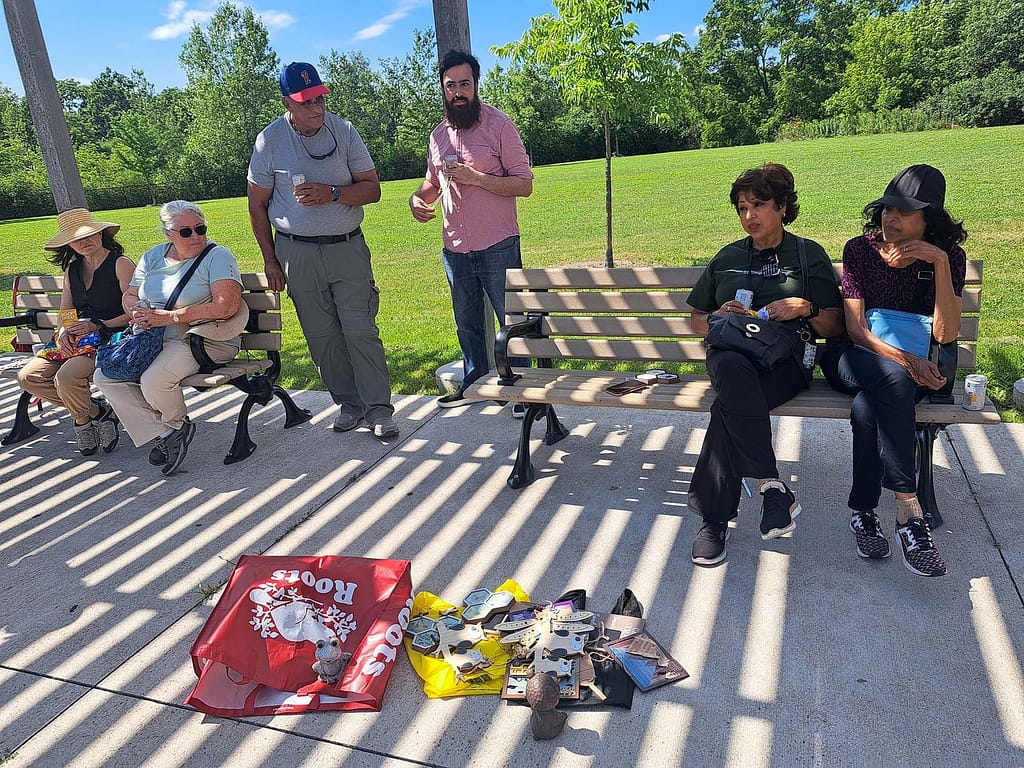
The event concluded with refreshments, informal conversation, and opportunities for participants to reflect on their experiences before departing at approximately 3:00 p.m.
The success of the Guided Ravine Interpretive Nature Walk demonstrates the value of community-based environmental education in helping residents understand and appreciate Toronto’s ravine system. Through hands-on learning, observation, storytelling, and shared experiences, participants gained a deeper understanding of watershed protection, biodiversity conservation, and the importance of urban natural spaces.
The InTO the Ravines Champions extend their sincere gratitude to Park People and the City of Toronto for supporting the InTO the Ravines Champion Program, and to all participants who joined the walk. Appreciation is also extended to EEFABE Canada for supporting community outreach and local event coordination.
Together, initiatives like these are helping build stronger connections between people and nature while inspiring the next generation of environmental stewards across Toronto.
Acknowledgements
This event was delivered by InTO the Ravines Champions through the InTO the Ravines Champions Program, supported by Park People and the City of Toronto. Community outreach and local coordination support were provided by EEFABE Canada.

Ulrich Stephane Tamo
Hi, my name is Ulrich Stephane Tamo. I am an environmental activist and ocean lover. I love to travel and write blogs.