Éducation Environnementale pour Un Terre Meilleure (EEFABE) Canada

Vous avez une initiative en développement durable
en tête? Collaborons afin de créer ensemble un impact environnemental durable.
Contactez‑nous
- +1 343 597 4664
- info@eefabecanada.org
- Toronto, Ontario
Abonnez-vous
Suivez-nous
Black Creek Parkland Plastic Cleanup Report: Removing Legacy Plastics from Toronto’s Urban Forests

Toronto’s urban forests do more than provide green spaces for recreation. They support biodiversity, improve air quality, absorb carbon, manage stormwater, and create healthier communities. Yet many of these natural areas continue to face a hidden threat: legacy plastic pollution.
This October, Environmental Education for a Better Earth (EEFABE) Canada resumed field activities under its 1 Tonne Plastic Removal Initiative, returning to Black Creek Parkland to remove plastic waste and other litter from naturalized areas near Driftwood Park.
The cleanup activities took place on October 10 and October 17, 2026, within the hydro corridor that runs through the parkland. This location was previously cleaned earlier in May, when volunteers removed more than 93 pounds of litter, including over 81 pounds of plastic waste.
With the arrival of fall, changing vegetation conditions created new opportunities to identify and remove litter that had remained hidden during the summer months.
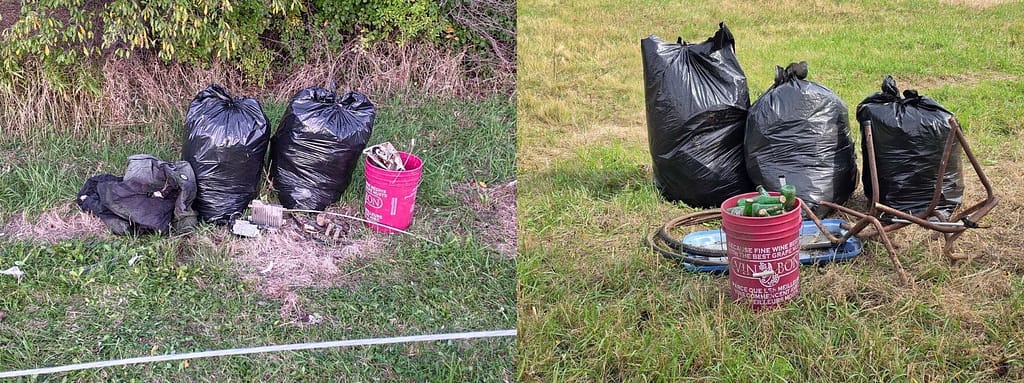
Why Fall Reveals a Different Side of Plastic Pollution
One of the most important observations made during the cleanup, as highlighted by the plastic cleanup report, was how seasonal change affects the visibility of environmental pollution.
Throughout the summer, dense vegetation had concealed large amounts of litter within the landscape. By October, maintenance mowing and the natural dieback of vegetation revealed plastics that had likely remained hidden for years.
However, this also highlighted another environmental concern.
In several areas, mowing equipment had shredded larger plastic items into smaller fragments. While the litter became more visible, it also became more difficult to remove completely. Smaller plastic fragments can more easily become embedded in soil and eventually break down into microplastics.
This reinforces the importance of early intervention and regular stewardship activities in urban natural environments.
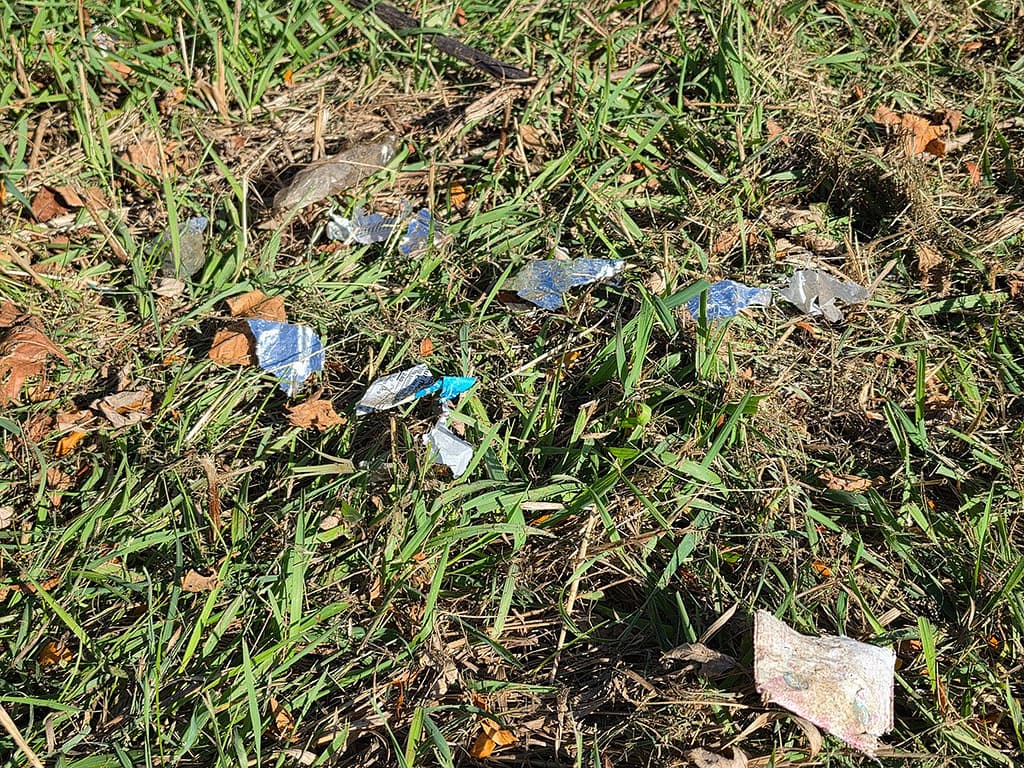
What Volunteers Found
As volunteers worked through the hydro corridor and surrounding green spaces, evidence of long-term pollution became increasingly apparent.
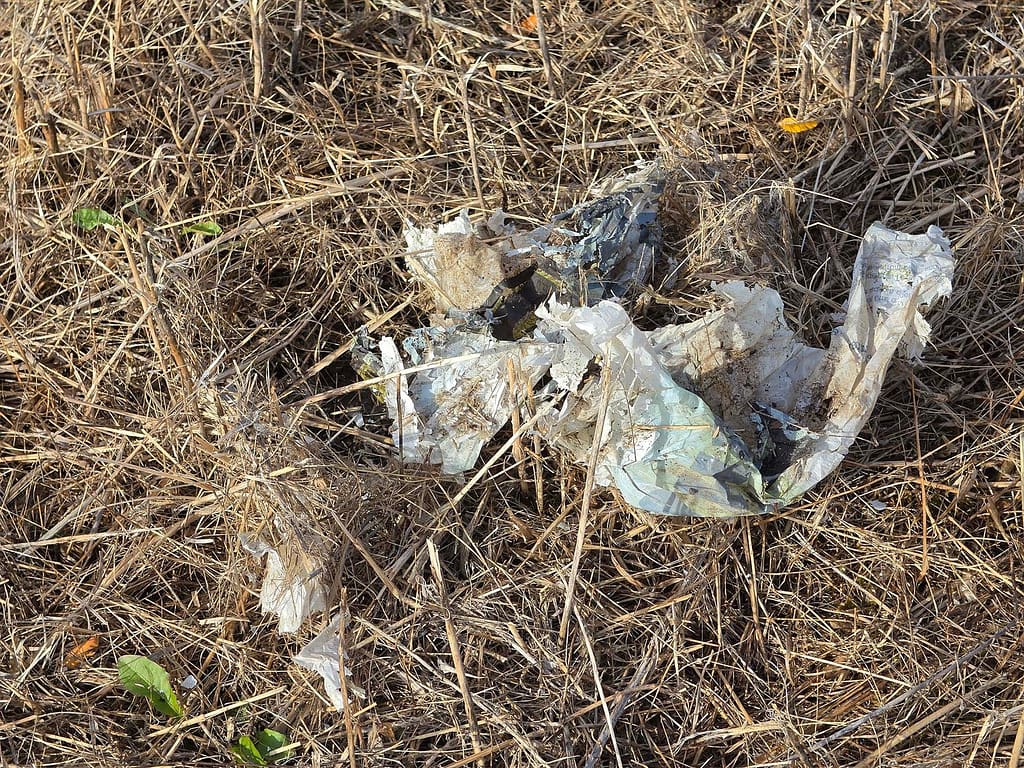
Plastic waste was frequently found embedded within vegetation, wrapped around plant roots, and trapped in invasive plant growth.
Several items appeared heavily weathered, indicating prolonged exposure to environmental conditions.
Volunteers also observed plant roots growing through and around synthetic materials, demonstrating how discarded waste becomes physically integrated into natural ecosystems over time.
In addition to plastic pollution, volunteers recovered:
- Electronic waste
- Scrap metal
- Clothing and textile waste
- Tires
- Beverage containers
- Household debris
The highest concentrations of litter were observed near residential boundaries and road corridors, where materials can be transported by wind, runoff, or direct dumping.
Cleanup Results
October 10, 2026
84.39 pounds of litter removed, including:
- 59.88 pounds of plastic
- 9.18 pounds of metal
- 7.21 pounds of fashion waste
- 5.6 pounds of reusable bottles and cans
- 2.52 pounds of tires
October 17, 2026
82.12 pounds of litter removed, including:
- 43.15 pounds of plastic
- 18.51 pounds of metal
- 10.17 pounds of electronic waste
- 5.86 pounds of fashion waste
- 4.61 pounds of reusable bottles and cans
Combined October Impact
- Total litter removed: 166.51 pounds
- Total plastic removed: 103.03 pounds
Total Project Impact at This Site
Including cleanup activities completed in May 2026:
- Total litter removed: 259.76 pounds
- Total plastics removed: 184.13 pounds
Campaign Impact Since April 2026
The October cleanups contributed to the growing impact of EEFABE Canada’s 1 Tonne Plastic Removal Initiative, which focuses on removing legacy plastics from Toronto’s urban forests, parklands, ravines, and green spaces before they can break down into microplastics.
Impact to Date
1,111.51 pounds of waste removed
704.03 pounds of plastic removed
Equivalent to approximately 31,600 single-use plastic bottles
Nearly one-third of our 1-tonne plastic removal target has been achieved.
Much of the plastic recovered through this initiative has been hidden beneath vegetation, embedded in soil, entangled in roots, or trapped within invasive plant growth for years. By removing these materials before they further fragment, we are helping protect biodiversity, improve ecosystem health, and reduce future microplastic pollution in Toronto’s natural spaces.
The results demonstrate the value of community-led environmental stewardship and highlight the importance of continued support from residents, businesses, governments, and environmental partners.
Plastics accounted for approximately 71 percent of all materials removed.
These sites include deep forest interiors, ravines, and neglected green spaces, where waste is rarely removed through standard municipal cleanup operations.
Why This Matters for Biodiversity
Plastic pollution is more than a visual problem.
As plastics age and fragment, they generate microplastics that persist in soil and water. These materials can affect ecosystem health, reduce habitat quality, and create risks for wildlife.
Urban forests such as Black Creek Parkland provide valuable habitat for birds, pollinators, small mammals, and countless other species. Protecting these areas requires addressing both visible litter and the hidden accumulation of waste that remains beneath vegetation and within naturalized landscapes.
By removing plastics before they completely fragment, community-led stewardship can help reduce future environmental impacts and support healthier ecosystems.
Building a Cleaner Future Through Partnership
The results achieved through the 1 Tonne Plastic Removal Initiative demonstrate the power of community action.
However, sustained environmental improvement requires collaboration among residents, businesses, governments, conservation organizations, and volunteers.
Support for initiatives such as plastic removal, biodiversity conservation, environmental monitoring, and community stewardship can generate measurable ESG and CSR outcomes while creating healthier public spaces for everyone.
EEFABE Canada welcomes opportunities to partner with organizations that share a commitment to environmental stewardship, biodiversity conservation, sustainability, and community resilience.
Together, we can remove legacy plastics, protect urban biodiversity, and build a cleaner and more sustainable future for Toronto’s green spaces.
Supportez nos cause: Faire Un Don Donate Today

Ulrich Stephane Tamo
Hi, my name is Ulrich Stephane Tamo. I am an environmental activist and ocean lover. I love to travel and write blogs.